
At “hang out at the Public Market and eat a large lunch” stage of the move.
Not sure about the September photoblogging challenge…
At the “hang pictures on the wall” stage of the move 🖼️
Seems it never rains in Southern California.
Cleaned out the storage closet 🧹
I never thought to try this until today, but it turns out you can share a Mac’s wifi connection out the USB C port to an Ethernet dongle when you can’t get to the router for a direct connection.
A little warm today ☀️
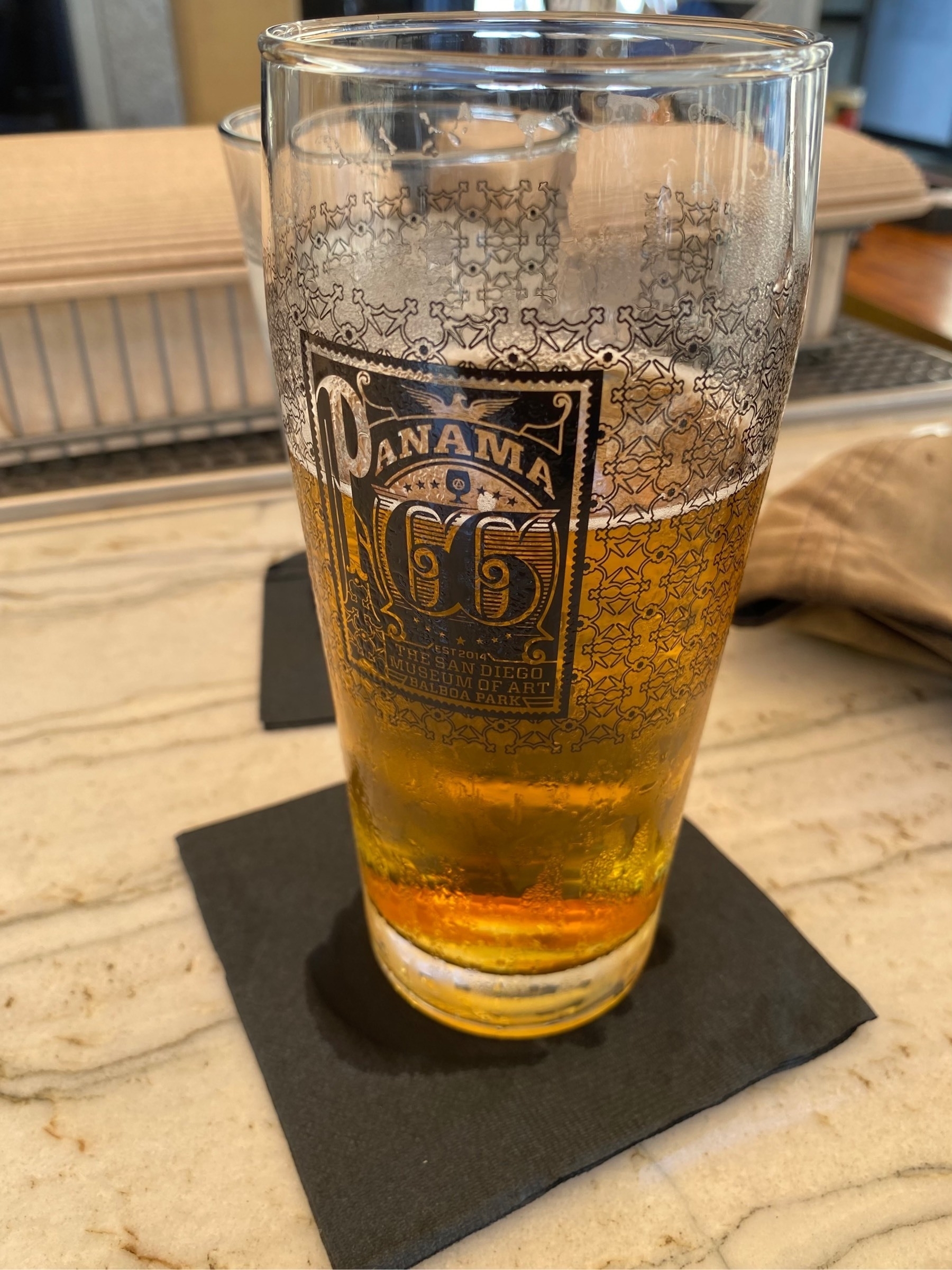
Panama 66, Balboa Park
I wasn’t using Threads before it was cool.
Too much to do and it’s Monday.
Stone Brewery, Liberty Station

Still don’t understand coroutines.
Already at the “just go out and buy it” stage of the move.
Moving day 1, TV and phone 📺📞
Too much to do.
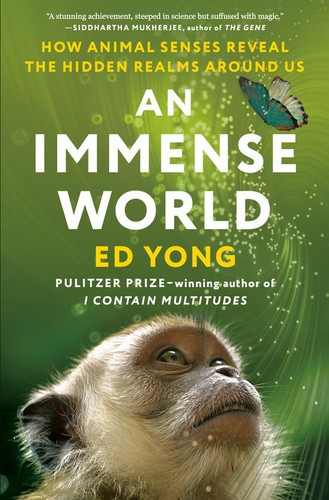
An Immense World by Ed Yong 📚
This is a wonderful book which has taken me far too long to read due to the vagaries of library ebook holds. The author is a long-time science journalist who has taken the time to survey the history and current frontiers of research in non-human perception, including a wide range of in-person interviews, both in the lab and the field. The writing is spare, expressive, and detailed, with copious footnotes, many pages of citations, a huge bibliography, and a comprehensive index. There are also a number of color photos (collected at the back of the ebook edition).
The book is organized in the logical fashion, covering each sense starting with the canonical five, which we humans have at least a chance of understanding, but then venturing into more exotic realms of echolocation, electroreception, and magnetoreception. The fundamental thesis is how difficult it is to really understand how other species actually perceive the world using senses which are so different in range, sensitivity, and even fundamental nature from our own, but by giving many examples and discussing how the science has evolved I felt I had at least made a start. Even the same sense can manifest in different ways, with a wide variety of sensory nerves and mechanisms, making it clear that there is no one true way to sense the world around us.
It’s hard to pick a favorite, but to give a couple of examples I was very interested in the discussion of the technical aspects of bat echolocation, which includes shifts in frequency and cadence which allow bats to zero in on insects in mid-air in complete darkness. And the discussion of how octopus nervous systems are wired up, allowing each arm to operate in a semi-autonomous fashion, leads to interesting ideas about how these highly intelligent creatures think, and how their minds might differ from our own centralized versions.
The book does end with a warning; having discussed how many different ways there are to perceive the world, we learn how human disruption of the environment can cause terrible harm to other creatures, in the form of light, sound, and electric field pollution. The bad news is that these threats to ecosystems get much less attention that the traditional chemical pollutants and global climate change; the good news is that they are much easier to correct: just turn down the lights, reduce the noise, and simply take into account the senses of our fellow earthlings. And when the world is less illuminated and noisy we arrogant humans will benefit as well from the dark and quiet, allowing us to again see the stars and hear the sounds of nature.
Highly recommended.
Here I go again ✈️
Fennel sausage and roasted fennel 🍕

There are few problems that can’t be solved by a new Apple Watch band ⌚️
Today I said “I’m going for a walk as soon as I get out of this meeting” but here I am still at my desk two hours later.
Fifty years ago www.gocomics.com/doonesbur…
Today I learned that HTTP header field names are case insensitive, probably not for the last time.
Now that X has rebranded can we start using “tweet” as the generic term for a microblog post on any platform?